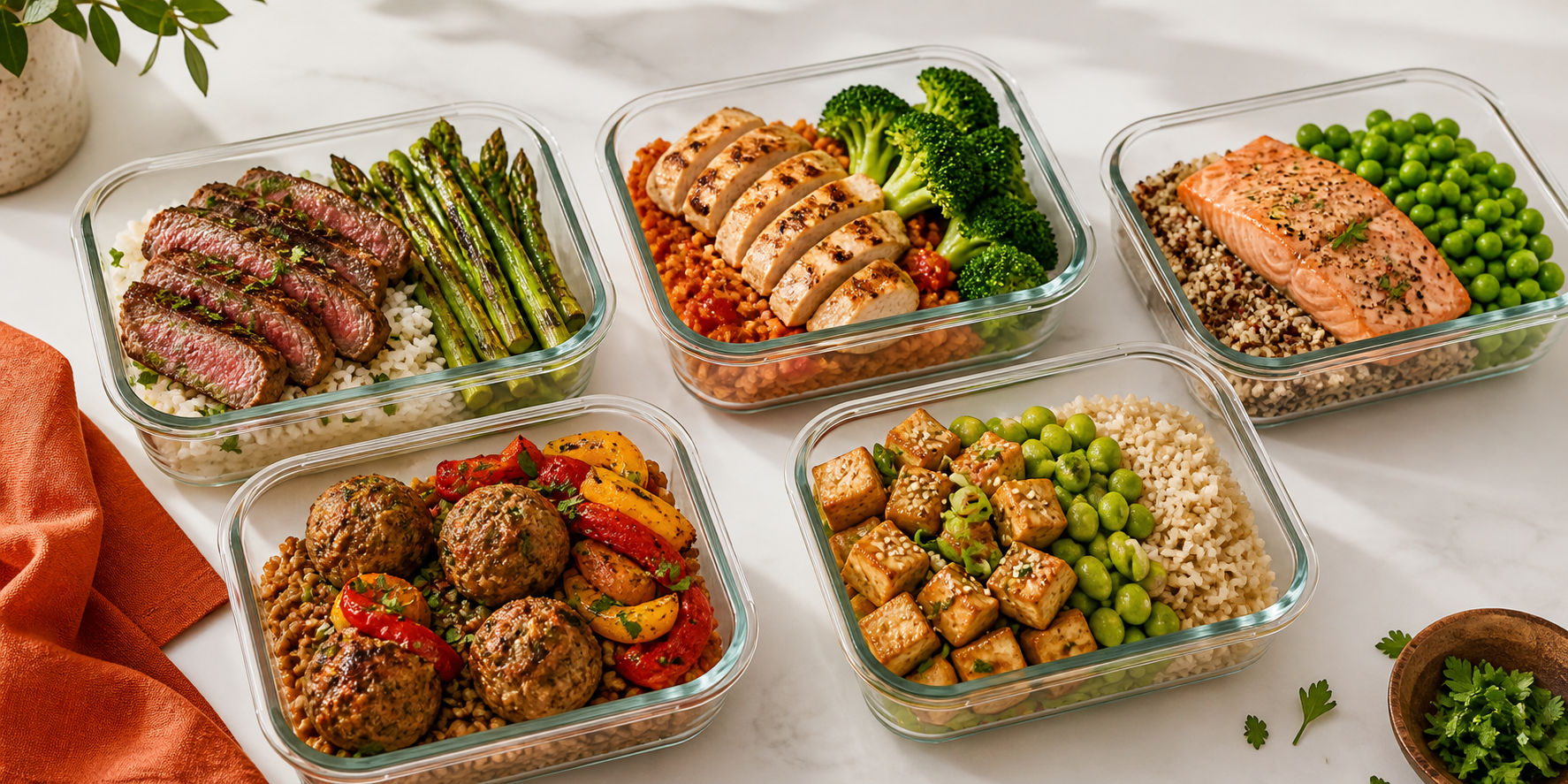
A useful fitness meal plan survives a late meeting, a hard training day, and the moment when cooking sounds impossible. It gives you enough structure to hit protein consistently without assigning moral value to a missed meal or forcing the same chicken bowl seven days in a row.
This one-week framework uses a protein anchor at each meal, distributes intake through the day, and keeps fiber-rich foods in the rotation. Portions should change with body size, appetite, training load, and goals. Use the menu as a planning template, then work with a sports dietitian when you need an individualized target.
- Pick a daily protein range before choosing exact recipes.
- Repeat ingredients, not identical meals, to reduce prep without boredom.
- Place convenient prepared meals on the days most likely to break the plan.
- Pair protein with vegetables, legumes, fruit, and whole grains for fiber.
Set the weekly structure
Most exercising adults can start a conversation within the ISSN range of 1.4 to 2.0 grams per kilogram per day. That range is broad because training and bodies are different. Convert your weight to kilograms, choose a conservative starting point, and divide the total across three meals and one or two snacks.
Plan around the week before you plan recipes. Mark training days, office days, social dinners, and travel. Put the easiest meal where your schedule is weakest. A ready-to-heat lunch on Wednesday can do more for consistency than an elaborate Sunday recipe that leaves five containers you no longer want.
Days one and two: build the base
Day one can start with Greek yogurt, oats, berries, and seeds. Lunch is herb chicken with tomato rice, broccoli, and white beans. Dinner pairs salmon with quinoa, peas, and roasted carrots. Day two uses eggs and black beans at breakfast, leftover salmon in a grain bowl, and turkey meatballs with farro and peppers at dinner.
Prep ingredients that can move between formats. Roast two vegetables, cook one grain, and make one bright sauce. Chicken becomes a rice bowl at lunch and a cabbage taco filling the next evening. Quinoa can sit under salmon, then move into a lentil and herb salad. Repetition lowers work while seasoning keeps meals distinct.
Days three and four: protect the busy middle
Day three is a strong place for a prepared meal. Choose a labeled entrée with a meaningful protein anchor and visible vegetables, then add fruit or a bean salad if fiber is light. Breakfast can be overnight oats made with dairy or soy. Dinner can be tofu, edamame, brown rice, and crisp vegetables.
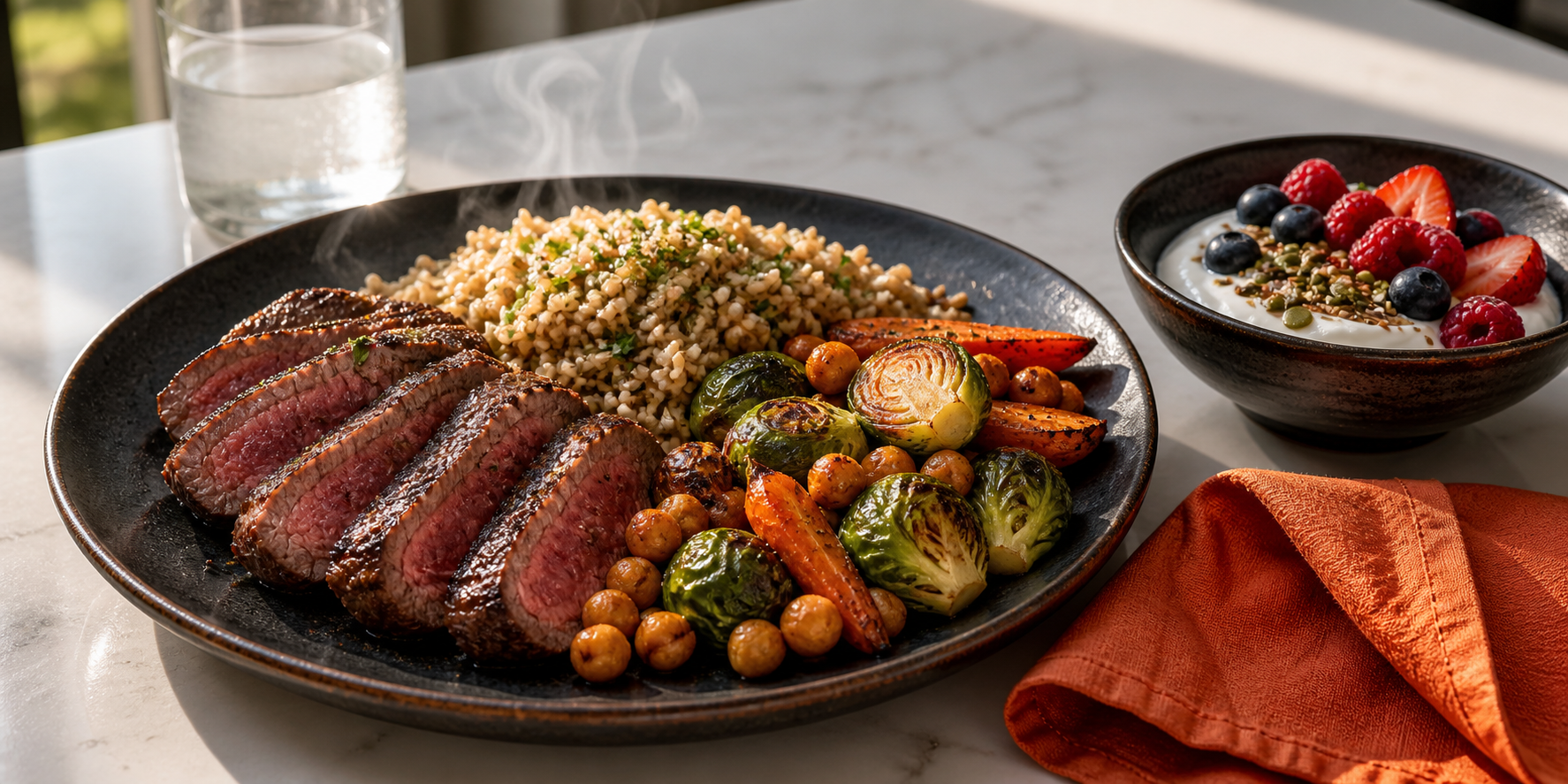
Day four can use cottage cheese, fruit, and walnuts for breakfast, a turkey and hummus wrap with vegetables for lunch, and medium-rare steak with savory rice, Brussels sprouts, carrots, and chickpeas for dinner. Adjust rice and fat portions to the day’s energy demands instead of cutting them by habit.
Days five through seven: keep flexibility
Day five might pair eggs with whole-grain toast, a lentil and chicken salad at lunch, and shrimp with black beans and rice at dinner. Day six can include a restaurant meal. Look for a grilled protein, a vegetable, and a starch you enjoy. Ask for nutrition information when the restaurant provides it.
Day seven is for using what remains. Fold roasted vegetables into an omelet, add leftover chicken to soup, or turn grains and beans into a bowl with herbs and yogurt. A flexible final day reduces waste and shows which ingredients deserve a place in next week’s cart.
Choose snacks that solve a real gap
A snack can bridge a long afternoon, support recovery, or finish a protein target. Greek yogurt with berries, cottage cheese with fruit, edamame, roasted chickpeas, a protein smoothie, or tuna with whole-grain crackers all serve different preferences. Choose one because the schedule needs it, not because the plan looks incomplete without it.
Post-training nutrition does not need to become a frantic countdown. A meal within a practical window can supply protein and carbohydrates for recovery. If dinner is hours away, use a snack that sits well. Hydration, total energy, sleep, and the rest of the day remain part of the outcome.
Use delivery without outsourcing the whole plan
A meal delivery plan can use CookUnity for ready-to-eat lunches with broad cuisine variety, while Factor can make protein-focused filtering fast. HelloFresh, Blue Apron, and Sunbasket support nights when you want to cook from a measured kit. Hungryroot can fill gaps with groceries and quick assembly. Current menus and delivery coverage vary.
Order only for the days where convenience has a clear job. Compare protein, fiber, calories, sodium, serving size, and final price. Keep two emergency meals in the freezer or refrigerator, plus easy add-ons such as frozen vegetables, microwave grains, beans, yogurt, or fruit. The backup is part of the plan.
Write next week’s order while the current meals are fresh in your memory. Keep the dishes that reheated well, remove the ones that needed too many extras, and rotate the protein source before boredom arrives.
COMMERCIAL FAQ
Questions before you buy
01Where can I buy a week of high-protein meals?+
CookUnity and Factor offer ready-to-heat weekly plans. HelloFresh, Blue Apron, and Sunbasket sell meal kits or mixed formats, while Hungryroot combines groceries and quick recipes. Enter your ZIP code, compare the current menu, and calculate the full weekly price before choosing.
02How many prepared meals should I order for one week?+
Start with the three to five meals most likely to be replaced by takeout or skipped. Ordering every meal can create fatigue and waste. Keep breakfast and snacks flexible, then add more prepared portions only after you know which dishes reheat well and fit your target.
03What should I look for in a muscle-building meal plan?+
Look for adequate daily protein and energy, protein distributed across meals, carbohydrates that support training, fiber-rich plants, and portions you can repeat. Resistance training and recovery are essential. A sports dietitian can tailor the plan for body size, training volume, and competition goals.
04Which high-protein meal service is best for variety?+
CookUnity markets one of the broadest rotating selections, though the exact count changes by delivery area. Create a sample cart and confirm that several meals fit your protein, fiber, calorie, allergen, and budget requirements. Useful variety means options you would order more than once.
05Can a high-protein weekly meal plan include restaurant food?+
Yes. Use restaurant meals where they fit your schedule and enjoyment. Covered chains publish calories and provide additional nutrition on request. At smaller restaurants, choose a clear protein, vegetables, and a useful carbohydrate, then accept that macro estimates will be less precise.
Sources
The Protein Meal Lab uses primary and authoritative sources. Service menus, prices, recipes, and delivery areas can change.