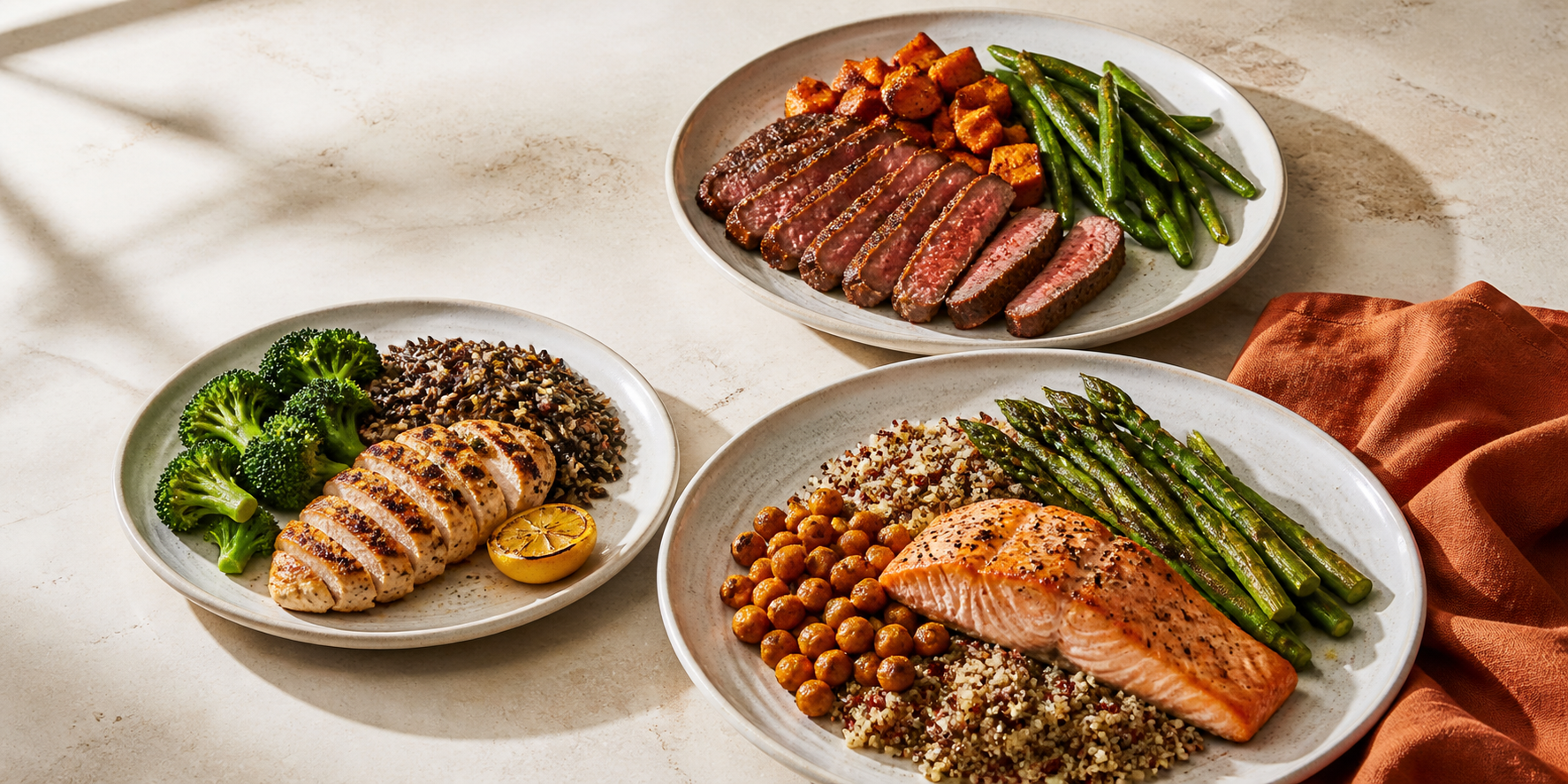
Protein targets become useful when they shape an actual plate. A daily number should tell you how much chicken to grill, how much tofu to roast, or which prepared meal deserves space in your cart. It should also leave room for vegetables, legumes, grains, fruit, and fats that make eating satisfying.
The adult Recommended Dietary Allowance is 0.8 grams of protein per kilogram of body weight per day. That is a population-level baseline designed to cover basic needs for most adults, not a universal performance target. People who train regularly often use a higher evidence-based range. Individual needs can also change with age, energy intake, pregnancy, illness, and medical history.
- Start with 0.8 g/kg/day as the adult baseline, then consider activity and goals.
- Many exercising adults land within 1.4 to 2.0 g/kg/day, according to the ISSN position stand.
- Spread protein across meals instead of forcing most of it into dinner.
- Keep fiber-rich plants on the plate while you raise protein.
Convert body weight into a starting range
To estimate the adult baseline, divide weight in pounds by 2.2 to convert it to kilograms, then multiply by 0.8. A 165-pound adult weighs about 75 kilograms, which produces a baseline of about 60 grams per day. Treat the result as a reference point, not a personal prescription.
Exercise changes the conversation. The International Society of Sports Nutrition states that 1.4 to 2.0 g/kg/day is sufficient for building and maintaining muscle for most exercising people. A 75-kilogram person using that range would land near 105 to 150 grams per day. A registered dietitian can narrow the range when performance, digestion, kidney disease, pregnancy, or another clinical factor is involved.
Match the target to the goal
For general maintenance with light activity, the baseline may be a reasonable place to begin. Endurance training adds repair demands alongside carbohydrate needs. Strength training creates a stronger case for the upper part of the exercise range. During a calorie deficit, adequate protein can help protect lean tissue, but total energy and resistance training still matter.
More is not automatically better. A high number that crowds out produce, grains, or foods you enjoy is hard to sustain. Build the smallest target that supports the goal, monitor strength, recovery, hunger, and digestion, then adjust with qualified guidance when needed.
Distribute protein through the day
A practical day might include 25 to 35 grams at breakfast, lunch, and dinner, plus a protein-rich snack. The exact pattern depends on the daily target and appetite. Research on protein distribution suggests that a more even pattern can support muscle protein synthesis better than saving most protein for one large evening meal.
Breakfast is often the gap. Eggs with Greek yogurt, tofu scramble with beans, or overnight oats with dairy or soy can move the first meal forward. Lunch can pair poultry, fish, lean beef, tempeh, or lentils with a grain and vegetables. Dinner then finishes the target instead of carrying it alone.
Build a plate that includes fiber
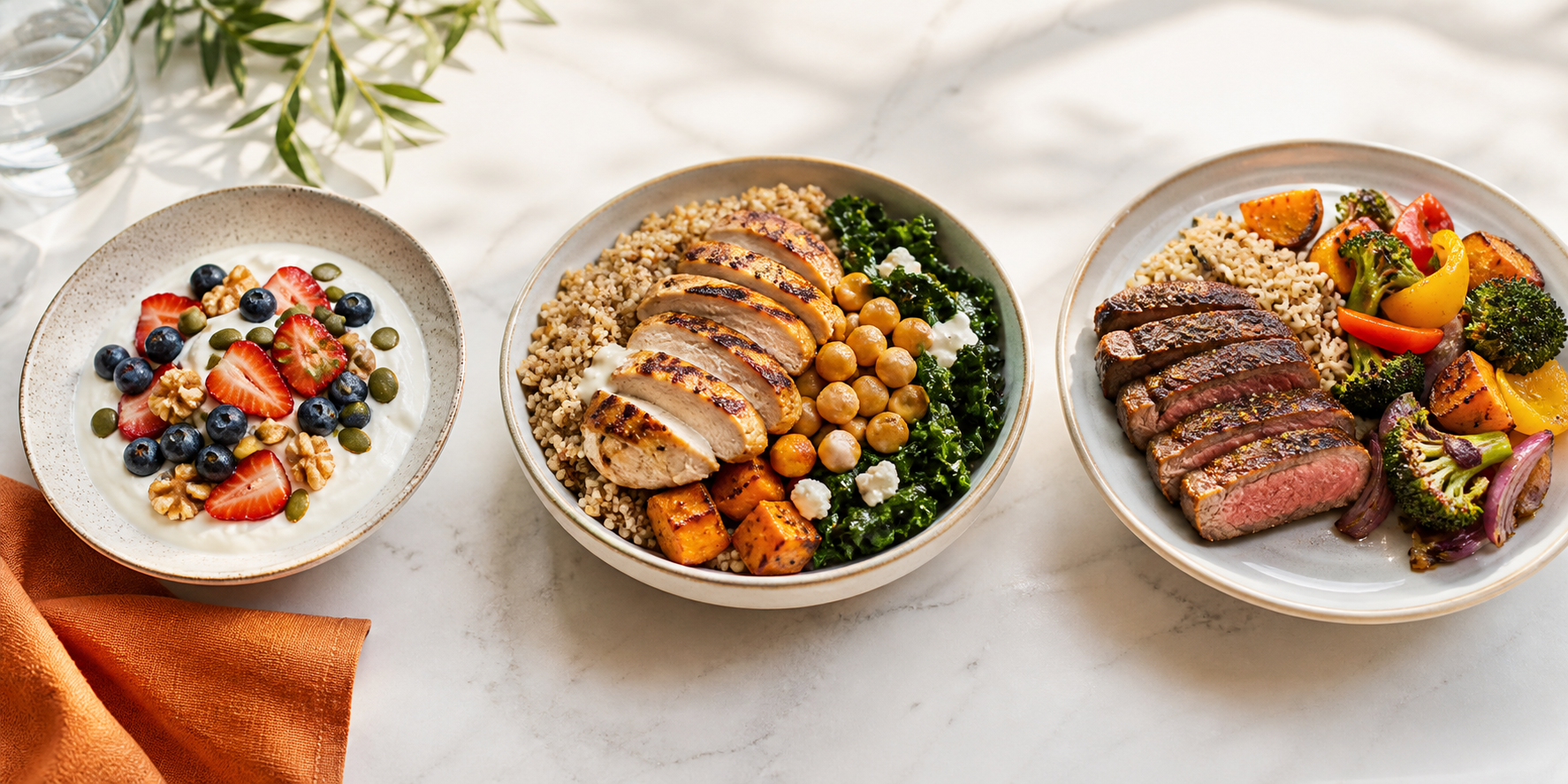
Protein is the anchor, not the whole meal. Add a generous vegetable, a legume or whole grain, and fruit when it fits. This creates more texture and gives the plate fiber that meat, poultry, fish, eggs, and most dairy foods do not provide.
A steak and rice bowl becomes more complete with roasted broccoli, peppers, black beans, or a cabbage slaw. A chicken meal gets more range from chickpeas and green vegetables. A tofu bowl can combine edamame, brown rice, and crisp vegetables. We do not want to hear that your fiber intake disappeared while protein climbed.
Shop prepared meals by the full label
Prepared meals can make a target easier to repeat because protein grams and serving size are visible before you eat. Compare protein, calories, fiber, sodium, and the ingredient list together. A meal with 40 grams of protein but almost no plants may still need a side salad, fruit, or beans.
For shoppers comparing a meal prep service with broad menu variety, CookUnity is a useful ready-to-heat option. Its available menu changes by location and week, so verify the nutrition panel for the exact dish in your cart. Factor emphasizes ready-to-eat convenience and protein filters. Meal kits such as HelloFresh offer more portion control during cooking but require more prep.
Know when to get personal guidance
A calculator cannot account for every medical or performance variable. People with kidney disease, a history of disordered eating, complex digestive symptoms, pregnancy, or medically prescribed diets should discuss major protein changes with a qualified clinician. Competitive athletes can benefit from a sports dietitian who understands training volume and competition schedules.
For everyone else, a two-week food log can reveal more than a dramatic overhaul. Record protein at each meal, note fiber-rich foods, and watch how the pattern affects hunger and recovery. The best target is one you can meet with food you like and a routine you can repeat.
COMMERCIAL FAQ
Questions before you buy
01Where can I buy high-protein prepared meals?+
CookUnity and Factor sell ready-to-heat meals with nutrition information for individual dishes. CookUnity is worth checking for menu breadth, while Factor is useful for direct protein-focused filtering. Availability, recipes, and nutrition vary by delivery area and week, so compare the current menu before subscribing.
02How much protein should I order per meal?+
Divide your daily target across the number of meals and snacks you usually eat. Many active adults choose meals with roughly 25 to 40 grams, but body size and goals matter. Use the published protein grams as a shopping filter, then review calories, fiber, sodium, and serving size.
03Are high-protein meal deliveries worth the price?+
They can be valuable when saved planning, cooking, and cleanup help you follow your target consistently. Compare the delivered price per meal with restaurant takeout and the groceries you actually use. Check plan minimums, shipping, skip controls, and whether you need extra sides.
04Which service is best for muscle gain?+
The best service is the one with enough protein for your target, enough total energy for training, and meals you will keep ordering. CookUnity offers broad choice, Factor has focused filters, and meal kits give you more control over portions. No service replaces a complete training and nutrition plan.
05Can I get enough protein from vegetarian meal delivery?+
Yes. Look for meals built around tofu, tempeh, lentils, beans, seitan, eggs, dairy, or soy foods. Check the grams per serving rather than relying on a vegetarian label. Add edamame, Greek yogurt, cottage cheese, or legumes when a delivered portion falls short.
Sources
The Protein Meal Lab uses primary and authoritative sources. Service menus, prices, recipes, and delivery areas can change.