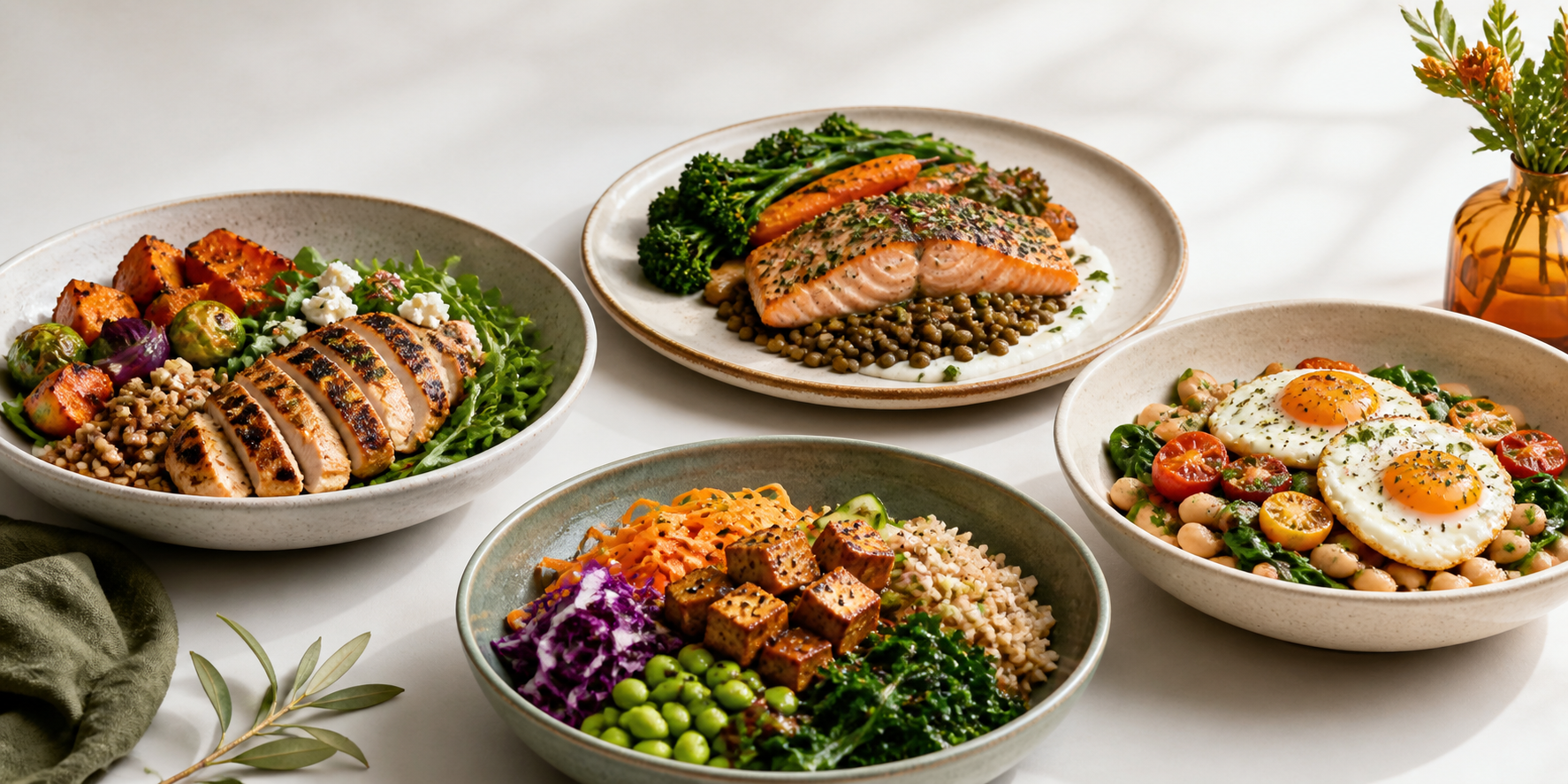
A high-protein meal does not require one diet identity. Chicken, salmon, Greek yogurt, tofu, tempeh, beans, lentils, and seitan can all anchor a strong plate. The useful question is how the protein source fits with the rest of the meal and with the way you prefer to eat.
Each pattern has tradeoffs. Omnivore meals make concentrated protein easy to find. Pescatarian meals bring fish and shellfish into the rotation. Vegetarian meals can use eggs and dairy alongside plants. Vegan meals need more deliberate portions and variety, but they can still reach substantial protein with familiar foods.
- Choose a clear protein anchor before adding sides.
- Use legumes, whole grains, vegetables, fruit, nuts, and seeds to keep fiber visible.
- Check grams per serving because diet labels do not guarantee a high-protein meal.
- Prepared meals and meal kits solve different problems, even within the same diet.
Omnivore plates have range, but balance still matters
Lean beef, poultry, pork, eggs, dairy, fish, and plant proteins give omnivore eaters many ways to reach a target. A grilled herb steak can sit beside brown rice, roasted broccoli, and lentils. Chicken can pair with tomato rice, zucchini, and white beans. The plant side keeps the meal from becoming protein plus garnish.
Choose cooking methods that preserve the food’s character. Grilling, roasting, braising, and searing create savory depth without requiring a heavy sauce. Prepared-meal shoppers should look beyond the protein headline and confirm whether the listed serving includes enough vegetables and a useful carbohydrate for their routine.
Pescatarian meals work best with varied seafood
Salmon, tuna, shrimp, cod, trout, sardines, eggs, dairy, soy, and legumes can support a protein-forward pescatarian pattern. Rotate species and preparation styles instead of asking one fish to carry the entire week. A salmon and quinoa bowl feels different from shrimp with rice and black beans or cod with potatoes and greens.
Seafood portions can look small next to a large grain base, so check the actual protein grams when ordering. Fiber still comes from the company around the fish: lentils, chickpeas, vegetables, whole grains, seeds, and fruit. A lemony bean salad can turn a simple fillet into a more substantial lunch.
Vegetarian protein can be layered
Vegetarian meals can combine eggs, Greek yogurt, cottage cheese, beans, lentils, tofu, tempeh, seitan, and whole grains. Layering two sources often produces a stronger meal without making any one ingredient feel oversized. Think lentil pasta with ricotta and spinach, or eggs with black beans, potatoes, and salsa.
Do not assume a cheese-heavy entrée is automatically protein-forward. Cheese can contribute meaningful protein, but it may arrive with little fiber and a high calorie load. Look for beans, peas, whole grains, and vegetables in the same dish. A visible plant base usually gives the meal better volume and texture.
Vegan meals need deliberate anchors
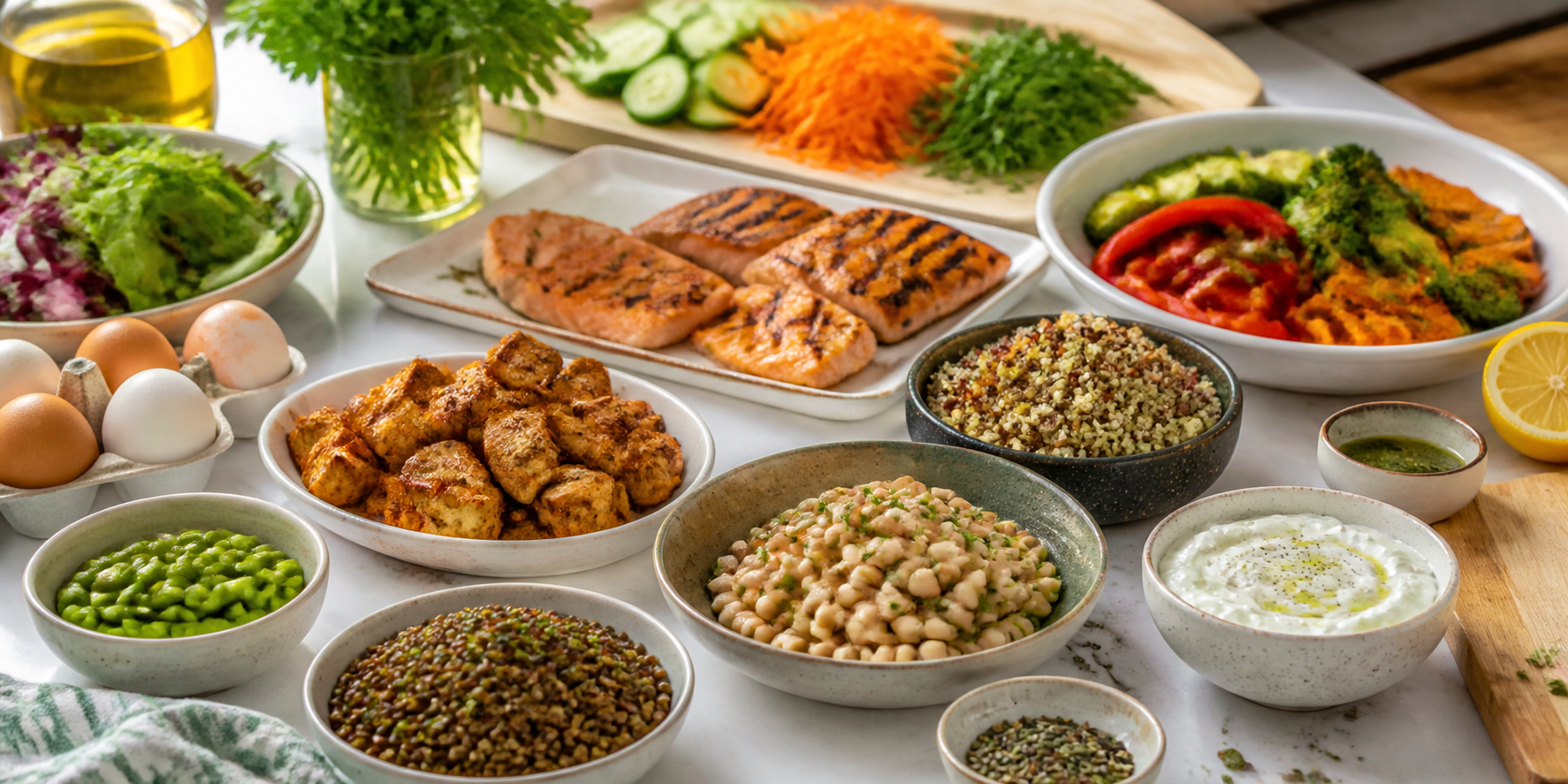
Tofu, tempeh, edamame, seitan, lentils, beans, peas, soy milk, and textured vegetable protein are dependable anchors. A vegan bowl built mainly from rice and roasted vegetables may sound substantial while delivering modest protein. Start with the anchor, then set the grain and vegetable portions around it.
Variety across the day matters more than forcing every amino acid pairing into one plate. A breakfast with soy yogurt and seeds, lunch with lentils and quinoa, and dinner with tofu and edamame creates multiple opportunities. People eating fully vegan diets should also plan for nutrients such as vitamin B12 with qualified guidance.
Low-carb and gluten-free filters need a second look
A low-carb filter may surface meat and vegetables, but it does not tell you how much fiber the meal contains. A gluten-free label addresses gluten, not protein quality, calories, or vegetable quantity. Use the filter to narrow the menu, then read the nutrition and ingredient details for each dish.
If you want fewer refined carbohydrates, keep beans, non-starchy vegetables, berries, and seeds in view. They bring fiber and texture. If gluten must be avoided for celiac disease or another medical reason, confirm preparation and cross-contact policies directly with the service rather than relying on a menu icon alone.
Choose the delivery format that fits the diet
Shoppers considering pre made meals can use CookUnity’s rotating chef menu to explore omnivore, pescatarian, and vegetarian options, though availability varies. Factor also sells heat-and-eat meals with dietary filters. Review current ingredient and allergen details before placing an order.
Meal kits such as HelloFresh, Blue Apron, and Sunbasket give you more control over oil, salt, and portion size during cooking. Hungryroot mixes groceries with quick recipes, which can be useful for vegan or vegetarian shoppers who want to add tofu, beans, yogurt, or vegetables to a suggested meal.
Before committing, build a pretend week from the live menu. Choose five meals that match your diet, record protein and fiber, and note any extra food each serving would need. This test exposes whether the service has lasting depth or one appealing option surrounded by compromises. It also gives you a realistic delivered cost for the kind of week you would order.
COMMERCIAL FAQ
Questions before you buy
01Where can I buy high-protein meals for different diets?+
CookUnity, Factor, HelloFresh, Hungryroot, Sunbasket, and Blue Apron all publish menus with dietary information, but the available filters and meals change. Ready-to-eat services reduce cooking. Meal kits and grocery hybrids give you more control over ingredients and portion size.
02Which meal delivery service has the best vegetarian protein options?+
The answer depends on your location and current menu. Search for tofu, tempeh, seitan, lentils, beans, eggs, Greek yogurt, and cottage cheese, then compare grams per serving. Hungryroot offers flexible grocery add-ons, while CookUnity and meal kits can provide more complete entrées.
03Can vegan prepared meals reach 30 grams of protein?+
Some can, especially meals that combine tofu, tempeh, seitan, edamame, beans, lentils, or textured vegetable protein. Confirm the nutrition panel for the specific serving. A bowl based mostly on grains and vegetables may need an extra protein add-on.
04Are pescatarian meal kits cheaper than seafood takeout?+
They can be, especially when the kit replaces delivery fees, restaurant markup, and unused groceries. Compare the final price per serving after shipping and plan minimums. Also consider cooking time, cleanup, portion size, and whether the recipe supplies enough seafood for your target.
05How do I compare diet filters across meal services?+
Use the same checklist on every menu: dietary fit, protein grams, fiber, serving size, allergens, total calories, sodium, preparation time, and price after shipping. Save two or three meals from each service before judging the overall selection.
Sources
The Protein Meal Lab uses primary and authoritative sources. Service menus, prices, recipes, and delivery areas can change.