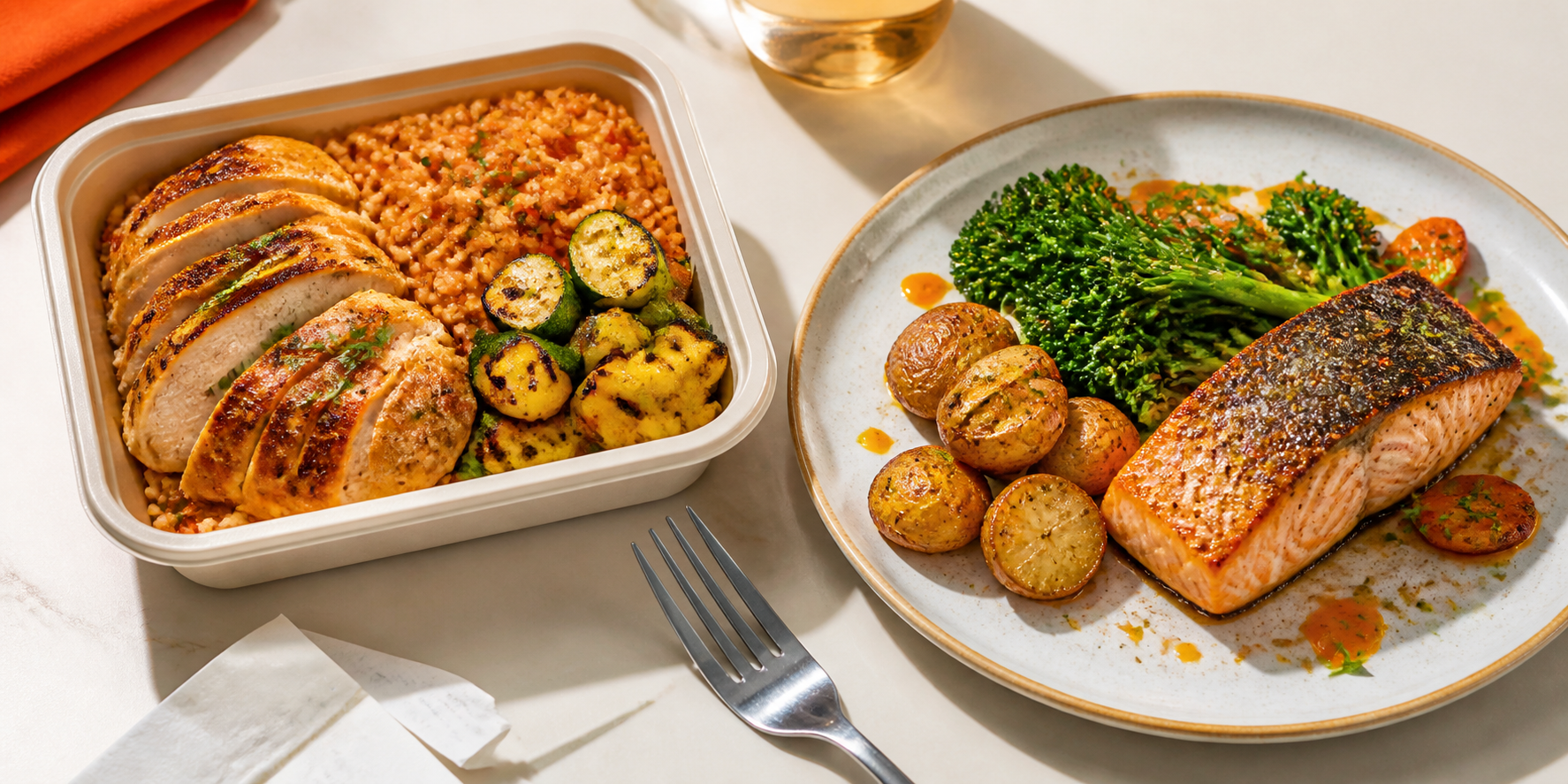
Restaurant food wins on atmosphere, spontaneity, and the pleasure of eating something made to order. Prepared meals win on repeatability. The tray has a defined serving, a reheating method, and nutrition tied to the exact dish. If you track protein or want a predictable weekday lunch, that difference matters.
This is not a verdict against restaurants. It is a comparison of information and control. A chain restaurant may publish extensive nutrition data. A local restaurant may provide none. A prepared service may list every macro, yet recipes can still change. The strongest choice depends on the meal, not the category name.
- Prepared meals usually make portion and nutrition comparison faster.
- Covered chain restaurants list calories and provide additional nutrition on request.
- Sodium, fiber, price, and serving size belong beside protein.
- Compare the final delivered or takeout price, including fees and extras.
Prepared meals offer a defined unit
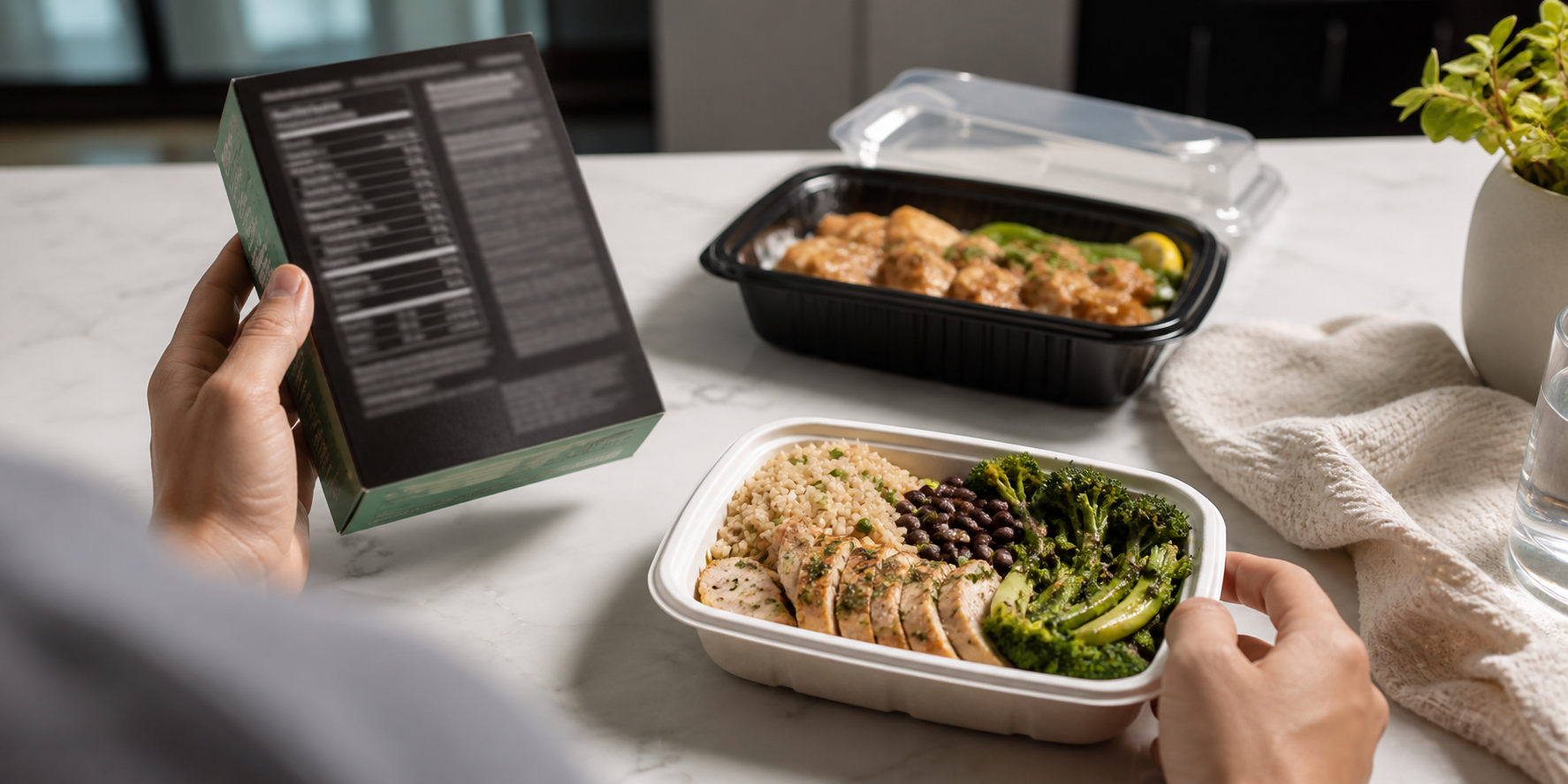
A single-serve tray gives you a stable comparison point. You can review calories, protein, carbohydrates, fat, fiber, sodium, serving size, and ingredients before it reaches the refrigerator. That makes it easier to line up three lunches and see which one supports your target without guesswork.
Consistency is useful, but it is not absolute. Services rotate menus, substitute ingredients, and revise recipes. Save the nutrition for the current dish rather than assuming a meal has the same numbers as last season. Confirm whether the package contains one serving and whether any separate sauce is included in the totals.
Restaurant information depends on the business
FDA menu-labeling requirements apply to restaurants and similar establishments that are part of a chain with 20 or more locations, operate under the same name, and sell substantially the same menu items. Covered businesses must show calories for standard items and provide written nutrition details, including protein and fiber, on request.
Smaller restaurants are not covered by that federal rule. Their staff may answer ingredient or allergen questions, but macro estimates can vary with the cook, oil, sauce, and portion. Even at a chain, customization changes the published standard. Extra dressing, a double starch, or a protein swap can move the numbers.
Compare the same six fields
Use protein, calories, fiber, sodium, portion size, and price. Protein shows the anchor. Calories indicate meal energy. Fiber reveals whether plants have a meaningful role. Sodium is worth tracking because both prepared food and restaurant meals can be concentrated. Portion size determines whether the comparison is fair.
Price should include shipping, service fees, delivery fees, tips, and any side you need to finish the plate. A prepared entrée that requires extra vegetables has a higher real cost. A restaurant bowl that feeds two meals may have a lower per-meal cost, but only if you portion and store the remainder.
Taste and reheating decide whether the plan survives
Nutrition data does not rescue a dry chicken breast. Look for dishes that suit reheating: braised meats, tomato rice, curries, grain bowls, roasted vegetables, and sauces packed separately. Crisp foods and delicate fish can be less forgiving. Customer photos can reveal portion and texture more honestly than a styled menu image.
Restaurants still have an edge when freshness and made-to-order texture drive the experience. Grilled steak, crisp salad, or seafood may be better eaten immediately. Use prepared meals for repeatable weekday structure and save restaurant orders for foods that benefit from the kitchen-to-table window.
CookUnity, Factor, and meal kits serve different shoppers
Among meal services, CookUnity pairs ready-to-eat convenience with a large rotating menu from multiple chefs. Its range helps when you want different cuisines without cooking, but current availability depends on location. Factor uses a more focused prepared-meal format and prominent dietary filters. Compare individual dishes instead of treating either catalog as uniform.
HelloFresh, Blue Apron, and Sunbasket require more assembly but let you control how much oil, sauce, and starch reaches the plate. Hungryroot sits between groceries and meal planning. These formats can produce a fresher result, though the published nutrition may assume you use every supplied component.
Create a mixed strategy
Most people do not need one source for every meal. Place prepared lunches on the busiest workdays, cook a meal kit when you have time, and choose restaurants for social plans or foods that travel poorly. The mix protects convenience from becoming boredom and keeps restaurant spending intentional.
Review the system after two weeks. Count the meals you enjoyed, the trays you supplemented, the restaurant leftovers you used, and the food you discarded. A service earns its place when it reduces friction without turning meals into an obligation. Keep the provider that fits your actual week.
Track ordering friction too. Easy skips, clear delivery windows, dependable packaging, and responsive support affect value even though they never appear on a nutrition panel. A cheaper entrée loses its advantage if unwanted boxes arrive or meals are frequently unavailable. Test a small order before relying on any service for most weekday food.
COMMERCIAL FAQ
Questions before you buy
01Where can I buy high-protein prepared meals with nutrition labels?+
CookUnity and Factor sell single-serve prepared meals and publish nutrition for individual dishes. Check your local menu because availability and recipes vary. Grocery stores also sell labeled refrigerated and frozen meals, which can be compared with the same protein, calorie, fiber, sodium, and price checklist.
02Are prepared meals cheaper than restaurant delivery?+
They often have a lower final price than restaurant delivery after fees and tips, but plan minimums and shipping can narrow the gap. Compare the delivered price per serving. Add the cost of any salad, fruit, or extra protein needed to make the meal complete.
03Which prepared meal service has the most variety?+
CookUnity markets a broad rotating chef menu, with the number of available meals changing by location and week. Variety only helps if enough dishes fit your protein, dietary, and price criteria. Review your delivery-area menu before choosing a plan.
04Can restaurant nutrition numbers be trusted?+
Covered chains use standardized nutrition information for standard menu items, but actual preparation and customization can create variation. Smaller restaurants may provide estimates rather than laboratory-tested data. Use published values as planning information and ask about ingredients or portions when the answer affects a medical need.
05Should I choose CookUnity or Factor for high-protein meals?+
Choose CookUnity if broad chef and cuisine variety matters most. Consider Factor if focused filters and a narrower ready-to-eat system appeal to you. Build a sample cart on both sites, compare five meals you would buy, then include shipping, protein, fiber, calories, and skip controls.
Sources
The Protein Meal Lab uses primary and authoritative sources. Service menus, prices, recipes, and delivery areas can change.